Summary: Cinder is a cyborg, and in New Beijing, that means that she is an outcast. She also happens to be a fantastic mechanic, and that is how she first meets Prince Kai and becomes embroiled in palace intrigue. Prince Kai, meanwhile, is desperately trying to stop the deadly plague that covers the nation and make tentative peace with the Lunar people.
My rating: 8/10 stars.
Plot: For a Cinderella retelling, I greatly enjoyed this story. I loved that the familiar Cinderella storyline was noticeable, yet subtle enough not to distract from the other elements of the story. Marissa Meyer deftly managed to meld fairytale with original tale, adding her own twists to the familiar story. I especially loved it when Cinder arrived at the ball and caused a stir, but not because she was the most beautiful girl there—because she was wearing a wrinkled dress, grease-stained gloves, and had mussy hair!
One tiny qualm that others might have about the plot was its predictability. I guessed the two major plot twists near the beginning, and turned out to be right when they happened. But, since I like to know the end of the story before I finish reading (because the Unknown causes me a lot of stress), I didn't mind at all.
I did feel, however, that bits and pieces of the political plotline could have been explained just a little more clearly, and that other parts of the plot could have been expanded on a bit (like Cinder fixing up the car).
Characters: The characters in Cinder are delightful. I immediately liked Cinder and Prince Kai. I also liked Dr. Erland, though I was a bit suspicious of him. I think Cinder felt that way about him, too, but that didn't inhibit her from learning all she could from him.
And let's not get started on the Lunars... They have something called "glamour," where they can manipulate biochemical energy and make people think, feel, and do whatever they want. Their queen, Levana, wants to take over earth. Like the characters in the book, I felt repulsed by Queen Levana and her threats.
Each character fulfilled their purpose, and left an impression on me.
Would I recommend this book? If you are a person who likes fairytale retellings, and if you are a person who likes quick, easy reads with good plot and characters, then I would definitely recommend this book! (There are, I believe, two swear words in this book.) The other books in the Lunar Chronicles are also great.
There is a corner of Youtube called "Booktube," where people vlog (video blog) about books. I have been watching Booktube videos for months now and have debated whether or not to start my own channel. Well, I have. I don't know how active it will be, but it's nice to have a secondary outlet (in addition to my blog) where I can ramble about books! The channel's name is A.G.Werff ReadsandWrites.
My first video on this new channel (which is linked with my agwerff@gmail.com email address) is all about my thoughts on Harry Potter. Enjoy!
Summary: Clara looks forward to being in the Olympics someday as she practices sports. Andrew looks back to the day his mother died as he takes care of his younger siblings. They've never met, but their lives are about to become intertwined forever as they both fall into the world of Rizkaland and learn of their places in the ancient prophecy foretelling the Lady Dragon's demise at their hands. Clara and Andrew must learn the customs of Rizkaland, must learn to fight the Lady Dragon, and must learn how to work together for this Narnia-esque tale to end happily.
My rating: 9/10 stars.
Plot: Most often, it is the tales with the simplest plots that gain the most recognition and love, because the themes are universal and always applicable. Just look at The Lord of the Rings, Star Wars, and Harry Potter. At the core, these stories are the same. The different characters and settings are what set these masterpieces apart. So it is with Water Princess, Fire Prince.
At its core, Water Princess, Fire Prince is the basic quest-to-defeat-the-villain plot with a Beatrice-Benedick romance* on the side. Along the way, the characters face adventure and difficulties.
While reading the first two parts of the book, which introduce the reader to Clara and Andrew separately, I couldn't wait to get to the third so that I could see Clara and Andrew interact with each other! That was my favorite bit. I loved their journey through the Mountain to get to the Kastle. Each part serves its purpose wonderfully and sets the reader up for the climax.
Even though the quest plot may be one I've read (and written) before, Kendra E. Ardnek gives it her own unique twist. Readers will be surprised by various plot twists near the end.
*For you non-Shakespeareans out there, a Beatrice-Benedick romance is where the two lovers start out at odds with one another. Seemingly, they will forever be encapsulated in strife... until they stop having fall outs and fall in love instead.
Characters: While Andrew is likable right away, Clara is a bit on the brash side. She knows who she is, she knows what she wants, and she is ready to go after it. Having her plans interrupted by an unexpected trip (or, should I say, swim?) to Rizkaland throws her for a bit of a loop, so it is no wonder that she isn't the most pleasant character at the beginning. I wouldn't be either, if I were suddenly transported to another world and told that I was supposed to save it from a Dragon. Clara, however, grows as the book progresses. She learns some important lessons and is the better for it. Clara feels real because of her faults and how she grows from them.
Andrew, as I said, is likable from the start. He learns and grows throughout the book, too. He is instrumental to the change in Clara, and he learns a few things from her as well.
The supporting cast are wonderful as well. Water Princess, Fire Prince boasts a large group of characters, but the author has given them each their own sparkling personality. I could tell that each character had a past and life beyond that which was portrayed in the text.
World: Worldbuilding is where Kendra E. Ardnek shines above all else. Rizkaland, like the worlds in her previous books, is a highly developed society with its own set of rules, land masses, peoples, creatures, and colors. In Water Princess, Fire Prince most of the reader's time is spent on one of Rizkaland's islands: Klarand. It is fun to explore the physics of Rizkaland with Andrew, who is the son of a scientist and, therefore, interested in that sort of thing.
If you are a visual learner and can't envision what a cylindrical world looks like, I highly encourage you to watch this video and read the accompanying blog post: http://knittedbygodsplan.blogspot.com/2015/08/wpfp-countdown-5.html
Water Princess, Fire Prince is Kendra E. Ardnek's best book yet, and I recommend it! Fans of the Narnia series by C.S. Lewis, allegorical fiction, and light fantasy will especially find this book to their taste.
WARNING: SPOILERS AHEAD! Also, some sensitive content.
Short reviews: I liked 1984's writing, but not the plot. I liked The Hunger Games plot, but not the writing.
Longer reviews:
Title-1984 by George Orwell.
Summary- The year is 1984 and Winston Smith works in the Ministry of Truth distorting history to make it politically correct. Even though Winston has lived most of his life with Big Brother's tyranny, he hasn't been completely brainwashed with the fanatical patriotism of his comrades. Winston knows that he's living in a fabricated reality, and longs to join the whispered-about rebellion. Then, Winston meets Julia and they begin a steamy relationship. Eventually, they are caught for their rebellious thoughts and actions and tortured until they succumb to Big Brother's brainwashing.
My rating- 4/10 stars.
Plot- I'm sure that 1984 is an incredibly original, powerful, and even prophetic novel... But I just didn't like it. For two reasons:
1. Winston and Julia's way of rebelling against the oppressive government was to have sex whenever they could, wherever they could, because the government had turned sex into a necessity instead of a pleasure.
"Listen. The more men you've had, the more I love you. Do you understand that?"
"Yes, perfectly."
"I hate purity, I hate goodness. I don't want any virtue to exist anywhere I want everyone to be corrupt to the bones."
"Well then, I ought to suit you, dear. I'm corrupt to the bones."
"You like doing this? I don't mean simply me; I mean the thing in itself?"
"I adore it."
That was above all what he wanted to hear. Not merely the love of one person, but the animal instinct, the simple undifferentiated desire: that was the force that would tear the Party to pieces.
Page 126.
Sex is not going to bring down the government. The Party is a very well-run, brainwashing machine. It's going to take a lot more than promiscuity in the Inner Party to destroy it.
In 1984, it seemed like promiscuity and hope were synonyms, which isn't true. Promiscuity is wrong and shouldn't be looked to as a solution to the world's problems. Besides, the proletariats, who make up most of the population, are freer than Party Members in that area and they haven't overthrown the government. Winston even says, at some point, that hope lies with the proles, if they would ever awaken and realize their potential (which sounds suspiciously like the plot of Mistborn by Brandon Sanderson, which I am reading right now. Maybe I am getting the two confused?).
This segues nicely into my second reason for disliking 1984...
2. Hope. Or, rather, the lack thereof.
The world is horrible in 1984: the government has absolute control over everything, even love. Children are taught to turn in their parents if they see their parents doing something wrong. Displaying the wrong emotion on one's face could get one killed. And Big Brother is always watching through the telescreens, which cannot be turned off.
But there are rumblings of a rebellion, of an underground fighting against Big Brother. There is hope! Winston is determined to find the underground; he even thinks he knows one of its members: O'Brien, who has given Winston one or two secret looks. Sure enough, O'Brien invites Winston and Julia to join the underground. They do, eagerly; but, as they are reading the rebellion's book in bed together, the police come to arrest them. It turns out that the underground is a fabrication of the Party to weasel out members who may not be completely loyal to Big Brother. Winston and Julia are tortured until they both relent and join Big Brother, all thoughts of hope for the future out of their minds forever.
I believe this to be unrealistic because there is always hope; there is always be hope in Jesus Christ. For over 2,000 years, Christianity has survived all over the world despite terrible persecution.
George Orwell wasn't a Christian, but even if one doesn't believe in God, one can still have hope. Humans are very resilient and creative. Someone in the world of 1984 had to have been working on some sort of rebellion against Big Brother. George Orwell obviously didn't decide to follow that person's story and that's fine... But the story he did choose to tell is depressing. I don't like reading depressing stories. If I wanted to be depressed, I would watch the news. Even without watching the news, I hear depressing real world stories all the time. Though I don't read to escape, necessarily, I enjoy hopeful stories where good triumphs over evil. Eventually, that is how this world will turn out, after all. God has already won the battle.
Characters-
Winston: He's very... gray. He doesn't have much of a personality and seems to be beaten and downtrodden, even though he does have thoughts of rebellion against Big Brother. I think Freud would probably say he has problems with his mother. He certainly has a fascination for women.
Julia: Julia is a very good liar. She pretends to be a perfect citizen while living promiscuously on the side. Here is her mindset:
Life as [Julia] saw it was quite simple. You wanted a good time;
"they," meaning the Party, wanted to stop you having it; you broke the
rules as best you could... Any kind of organized revolt against the Party...struck her as stupid. The clever thing was to break the rules and stay alive all the same.
Page 131.
Neither of them are very admirable protagonists. None of the other character's made enough of an impact on me to be mentioned.
Writing- As I've said before, I like George Orwell's writing style. It's simple, and he doesn't include any extra or distracting information.
Good advice, Georgie.
Title-The Hunger Games by Suzanne Collins.
Summary- Every year, two children from each of the twelve districts is chosen to take part in the Hunger Games—a brutal competition where the children must kill each other until there is only one person left: the winner. This year, Katniss Everdeen volunteers as tribute to save her little sister from the Hunger Games. What will happen in the arena, especially now that Katniss' plan includes saving the other tribute from her district, Peeta Melark?
My rating-7/10 stars.
Plot- I enjoyed following Katniss around District Twelve as she went about her day-to-day activities, I enjoyed traveling with her to the Capitol, I enjoyed watching her prepare for the Hunger Games, and I enjoyed watching her survive in the arena. The magic of the plotline lies in Suzanne Collins' world. She created a fascinating world and showed us all the different aspects of that world. We get to see several of the district's distinct personalities. We get to see the crookedness of the Capitol. We get to see the preparation the tributes go through before entering the arena. We get to see the tributes fight in the Hunger Games.
This book definitely held my attention and I enjoyed reading it, though, occasionally, it does get a little too gory for my taste.
Characters-
Katniss is a wonderfully done character (much, much better than Bella Swan from Twilight). Circumstances have made her suspicious and a fighter. Every day, she struggles to stay alive and keep her family alive. The skills she learned in the woods, hunting with her father, help her tremendously in the Hunger Games. She's very smart and able to adapt to whatever is thrown her way. Her ultimate goal stays the same throughout, however: to keep her family safe. But we do see Katniss change over the course of the story. When she returns home after the Hunger Games, she is different than when she went away.
Peeta is good character, too. He's the opposite of Katniss. While Katniss is all about survival, Peeta is more open and trusting. He's a genuinely good guy, which, I suppose, could make him a little boring at times. As a good person, though, people don't expect it when he does something sneaky and epic.
The other characters in The Hunger Games are great, too. Each has his or her own personality which makes him or her endearing to the reader. The first time I read this book, my favorite character was Cinna. This time around, however, I really liked Katniss.
Writing- I didn't enjoy Suzanne Collins' writing style very much, but maybe that's because I'm not a huge fan of first person present tense writing, which is what The Hunger Games is written in. I found her writing a bit simple. Nothing wowed me or stuck out to me.
Final thoughts: If you're looking for a thrilling story (perhaps a summer read?), try reading The Hunger Games!
Unless you have to read 1984 for school, I would skip it.
About three things I was absolutely positive. First, Edward was a vampire. Second, there was a part of him—and I didn't know how potent that part might be—that thirsted for my blood. And third, I was unconditionally and irrevocably in love with him.
Summary: Isabella—excuse me, Bella—Swan moves to Forks, Washington to live with her father after her mother remarries. She's not too optimistic about her new situation, but then she meets Edward Cullen—the mysterious and extremely handsome Edward Cullen, who just happens to be a vampire. When a trio of strange vampires come to Forks, one of them chooses Bella to be his next meal; the Cullens family must protect Bella.
My rating: 5/10 stars.
Plot: Romance plotlines where the lovers are faced with insurmountable obstacles which keep them apart or romance plotlines where the lovers hate each other at first and fall in love later are fine. Unfortunately, neither of these plots show up in Twilight. There is slight conflict because Edward is a vampire and oh-no-he-might-eat-Bella, but Bella's unconditional and irrevocable love for him and his reciprocation aren't enough to create a full-fledged plot. I feel like Stephanie Meyer realized this 3/4ths of the way through the book and decided she had better add a real plot to the book. Hence, three random vampires (who are not vegetarian vampires like the Cullens family, who only drink animal blood) show up and one of them decides to track Bella until he can catch her and eat her. He knows that Edward and his family are going to protect Bella so hunting Bella turns into a game for him. The last 1/4th of the book is action-packed compared to the first 3/4ths. James, the tracker vampire, lures Bella away from her guards (Edward's siblings) and, before attempting to kill her, tortures her for a bit (giving Edward and family enough time to attempt a not-really daring escape). Bella is in so much pain that she doesn't know what's going on and eventually passes out. Later, she wakes up in the hospital and has to be told what happened. So, even when something exciting happens, we don't get to see it.
While there is little plot to speak of, I must (hesitantly) say that I (sort of?) enjoyed Twilight. At the very least, it was entertaining. While I repeatedly facepalmed at Bella's idiocy, I did want to find out what would happen to her and Edward. There is something alluring about a romance story... will they get together or won't they? Will it be a happily ever like Cinderella, or will it end horribly like Romeo and Juliet?
Characters: Confession time! I wrote in the margins of this book. I underlined things. I dogeared pages. I wanted to have quotes to go along with this blog post; that's why I did it. Of course, most of my notes ended up looking the same... observe:
And all my notes are about the same person: Bella Swan. Bella Swan must be the worst role model for girls EVER. Examine:
My stomach did frightened little flips at the thought of sitting next to [Edward] again. pg. 42.
Bella is afraid of Edward. That is not a good sign. Two pages later, however, her infatuation begins... "Ladies first, partner?" Edward asked. I looked up to see him smiling a crooked smile so beautiful that I could only stare at him like an idiot. pg. 44.
And... I was in danger of being distracted by his livid, glorious face. It was like trying to stare dwn a destroying angel. pg. 65.
Edward continually warns her that she should stay away from him. "I'm warning you now that I'm not a good friend for you." Behind his smile, the warning was real. pg. 88.
And Bella knows that her fixation with Edward is unhealthy. I threw down a quick bowl of cereal and some orange juice from the carton. I felt excited to go to school, and that scared me. I knew it wasn't the stimulating learning environment I was anticipating, or seeing my new set of friends. If I was being honest with myself, I knew I was eager to get to school because I would see Edward Cullen. And that was very, very stupid. pg. 54. I was consumed by the mystery Edward presented. And more than a little obsessed by Edward himself. Stupid, stupid, stupid. pg. 67. I couldn't believe the rush of emotion pulsing through me—just because he'd happened to look at me for the first time in a half-dozen weeks. I couldn't allow him to have this level of influence over me. It was pathetic. More than pathetic, it was unhealthy. pg. 74.
Yet, even though Bella knows her obsession is unhealthy, she continues to obsess. Bella analyzes his every word and his every movement. It starts to distract from everything else in her life.
When she first comes to Forks, she expects to be ignored like she was in Arizona. When she is, instead, accepted and loved, she doesn't revel in her new friendships. Instead, she wishes she were ignored, so that she could spend more time with Edward. Because when I thought of him, his voice, his hypnotic eyes, the magnetic force of his personality, I wanted nothing more than to be with him right now. pg. 139.
When Edward isn't in school, when they're apart, Bella becomes depressed. And I couldn't stop the gloom that engulfed me as I realized I didn't know how long I would have to wait before I saw him again. pg. 111. I realized I'd been holding on to a last shred of hope when I entered Biology, saw his empty seat, and felt a new wave of disappointment. The rest of the day passed slowly, dismally. pg. 146. I was wrestling with despair. I was trying so hard not to think of him. pg. 156. "What time will I see you tomorrow?" I asked, already depressed by the thought of him leaving now. pg. 243.
Not only is it extremely unhealthy to depend on one person for your happiness (so much so that when he or she goes away, you become depressed), but it is dangerous also. Because Bella is so consumed with Edward, she does things that she normally would not do. She does not even recognize herself: I skipped to the bathroom, my emotions unrecognizable. I didn't know myself, inside or out. The face in the mirror was practically a stranger—eyes too bright, hectic spots of red across my cheekbones. pg. 313.
She flirts with Jacob to get information (about, you guessed it, Edward). "So you're, what sixteen?" I asked, trying not to look like an idiot as I fluttered my eyelids the way I'd seen girls do on TV.
She lies, to multiple people. Her friends. Her father. Even though, earlier in the book, she says she doesn't like lying.
She starts doing dangerous things... "Will go with me to Seattle?" he asked, still intense. I couldn't speak yet, so I just nodded. pg. 84. This is after Edward tells Bella that he's dangerous and that she shouldn't be around him. For all she could know, he could be some sort of creep. Girls, never agree to go on a road trip with a guy you just met, especially if that guy told you that you should stay away because he's dangerous. I don't care how gorgeous he is. Stay away!
She takes drugs to help her sleep the night before going out with Edward. I knew I was far too stressed to sleep, so I did something I'd never done before. I deliberately took unnecessary cold medicine—the kind that knocked me out for a good eight hours. pg. 251.
It's bad enough that Bella finds her identity in Edward (Besides, since I'd come to Forks, it really seemed like my life was about him. pg. 251), but it's even worse that her personality changes because she's with him. This book is a huge warning sign for dysfunctional, unhealthy relationships.
Yet, because Twilight is fiction, Bella and Edward's relationship isn't dysfunctional. Why? Because, even though Bella is in an extremely unhealthy relationship, Edward is a perfect man so, therefore, everything works out fine.
Edward is gorgeous. Edward is smart. Edward is a gentleman. Edward even has great taste in music (he listens to Claude Debussy!). Also, Edward is completely devoted to Bella. And I'm not sure why. Look what he says about her: "Bella, it's not my fault if you are exceptionally unobservant." pg. 81. "Bella, you are utterly absurd," he said, his low voice cold. pg. 82.
He doesn't think she's smart. In fact, Bella isn't all that smart. People have complained that Bella is a hollow shell of a character. She is. I think this is a ploy: every girl wants a handsome, devoted boyfriend like Edward; because Bella is a shell, every girl can project herself into Bella. "I love you," I whispered. "You are my life now," he answered simply. pg. 314.
What girl wouldn't want that kind of devotion from the man she's obsessed with?
The truth is, however, that the perfect man does not exist, except in fiction. No man can live up to the standard of perfection that girls see in Edward and other fictional men. If a girl places her identity in who she perceives to be the perfect man, she's going to be disappointed and hurt. In turn, the man will be hurt because he feels like he's doing something wrong. Eventually, the relationship will break apart.
It's a pity that Twilight wasn't a story about the Cullens family and Bella's dad Charlie, because they rock. The book would work so much better if Bella wasn't in it.
Even more the pity because Stephanie Meyer is a talented writer. Maybe you couldn't tell it from all the goopy romantic quotes that I copied above... but Stephanie Meyer is a talented writer. Her books would be pretty epic if they weren't filled with so much romance.
To close, I have to share a hilarious quote from Bella's first day of school in Forks:
I can do this, I lied to myself feebly. No one was going to bite me. pg. 14.
Summary:
Rumors of war reach King Arnaud and Queen Zara's ears and they send their daughter Princess Kamarie and Kamarie's maid, Darby, in search of the former King's Warrior. Accompanying them is Oraeyn, a squire who would rather be anywhere else than babysitting the princess and her maid. They succeed in their mission and bring Brant and Yole—a lost boy—back to the capitol. The threat of invading Dark Warriors becomes very real as Kamarie, Darby, Oraeyn, Brant, and Yole travel the land of Aom-igh meeting new friends and having adventures.
My rating:
9/10 stars.
Plot:
One of my favorite plot devices is when there is a story within a story (such as the movie Chitty Chitty Bang Bang) and my other plot device is when the characters travel to many different places, having adventures the whole time (such as The Red Sea Sharks, a Tintin book). King's Warrior employs this latter plot device. We follow the characters through forests, mountains, farmland, and underground tunnels; we follow them at the palace, on the battlefield, near the sea, and through a desert. Everywhere they go they face new challenges. Jenelle Schmidt weaves their adventures together seamlessly, building to an exciting climax where everything is tied together.
The book does, perhaps, start a little slow. I remember having a hard time getting into it the first time I read it. However, after a few chapters, I got sucked into the world and the character's quest; by the end, I didn't want to leave the pages! Characters:
Princess Karamie- Although Karmarie enjoys riding horses and sword fighting, she is not your typical kick-butt princess who feigns masculinity and doesn't need anybody's help with anything. Kamarie is very well-written. There is a nice balance between femininity and toughness. She grows a tremendous amount over the book, and it's a fun transformation to watch!
Oraeyn- Oraeyn is my favorite character. He is a squire training to be a knight, and he is the only one who can be spared to travel with Kamarie and Darby to find the King's Warrior. At first, he and Kamarie clash, but they eventually grow to be friends. Like Kamarie, Oraeyn grows a lot over the book.
Darby- Darby is Kamarie's maid. I didn't like her very much the first time I read King's Warrior, and I'm not completely sure why. There is a plot twist surrounding her that really surprised me and, after the twist, she is quite different. Her character seemed to just be there, and not have a set purpose (besides butting heads with Brant) or personality (besides her stubbornness; whereas her sisters each had a distinct facet to their personalities—Calyssia was the Keeper, Leila loved animals, Zara was queen and an archer. What is a female archer called?). I liked her much better the second time I read the book.
Brant- The mysterious "King's Warrior." Brant is a likable character from the beginning. He is strong and noble and tragic. He is kind of like Aragorn in that he's secretive about himself, but very knowledgeable about traveling, camping, tracking, and fighting.
Yole- Yole is a boy that Kamarie, Oraeyn, and Darby find wandering in the mountains before they reach Brant's house. They take him under their wing (no irony intended) and he travels along with them. Poor Yole has never fit in anywhere and doesn't know why. Finally, he finds friends in Kamarie and company. They teach him squiring skills along the road. Yole is a very likable character. I can't wait to find out what happens to him in the Book #3!
There are many, many supporting cast in addition to the five main characters. Most interesting, perhaps, is Kiernan Kane, the wandering minstrel, and his mule, Silver (I keep waiting for him to say "Hi ho, Silver, away!"). Also, the host of magical creatures who have disappeared below ground. And who can forget about the looming Dark Warriors, sailing from their unknown lands to attack Aom-igh?
World building:
Jenelle Schmidt has created a wonderful fantasy world! It feels much deeper than what is portrayed on the page, as most great fantasy books are wont to do. Each race of beings has their own culture and their own characteristics. It's cool to see how each are expressed in the book.
Also, Aom-igh has a thought-out history, which I appreciated. I loved the references to former kings of the realm.
Word choice/diction/syntax/grammar:
My biggest complaint about King's Warrior is the recurring comma/semicolon problem. Haha, I know, huge complaint. Often, there is a comma where a semicolon or a period should be. Other than that, however, the book's grammar and word usage were wonderful! Places and people were described very well. I was really impressed with how Jenelle Schmidt was able to portray what her character's were feeling and going through internally, as they grew and developed over the story.
Would I recommend this book?
Absolutely, yes! If you enjoy fantasy books or adventure books, pick this one up! It is definitely worth it.
Title:
Second Son.
Summary:
The story of Brant. How he grows up and how he ends up in Aom-igh.
My rating:
8/10 stars.
Plot:
The first part of the book felt like a bit like a Downton Abbey episode—skipping from important scene to important scene, years lapsing in between. Of course, Jenelle Schmidt does a much better job because she does not skip important discussions and she tells us what goes on in the interim. Even so, Second Son felt a little disjointed because of the time jumps, but I think any time you skip a significant amount of time in a story it will feel disjointed. It settled down halfway through the book.
Like King's Warrior, this story follows its characters through many, many adventures in many, many different places. As I said, I love this type of storytelling! I wished we could have more time in each area in Second Son, to get to know different people and cultures more (especially when Brant was training under Sheyardin). Characters:
Brant- This story explains much of the mystery about Brant. You don't learn a lot about him in King's Warrior, but in Second Son, you get to see him grow up. It was interesting to see how each experience he went through changed him into the Brant we meet in King's Warrior. Jenelle Schmidt did a great job with his character development.
Ky- Brant's brother. Even more interesting that Brant's development was Ky's. It was fascinating watching him make decisions that I knew would eventually destroy him.
Many other characters filter in and out of the pages such as the Rambler woman Brant become friends with, and the thief whom he also meets in the Rambler's camp (he's one of my favorites). There is also his mentor Sheyardin, who I felt could have used some more page-time so I could get to know him and feel for him more. And then, of course, there is Arnaud. I loved seeing his and Brant's friendship grow over the years! And who is that mysterious minstrel names Kiernan Kane, with the mule named Silver? World Building:
The world building for Brant's home country is very well done. Their culture and traditions are very different from any of the other cultures I encountered in this series. When Brant arrives in Aom-igh he faces a bit of culture shock, and must learn to adapt to something different than he's used to, which is great (especially when asks Arnaud a dumb question and Arnaud looks at him like he's crazy. :P)
Brant and Sheyardin did quite a bit of island-hopping while Sheyardin mentored him. That got a little confusing... Without a map, it was hard to tell where they were and how far from home and which island did what. They all blurred together in my mind. The islands where Brant spent significant time were better, but not as fully portrayed as his homeland or Aom-igh (which was probably good, otherwise the book would have been 1000 pages long, instead of 400+!)
Word choice/diction/syntax/grammar:
Again, there was the comma/semicolon thing, but that's not a huge deal. Also, for some reason, my copy didn't have page numbers. That wasn't a huge deal either; I had fun writing in my own (it felt kind of sacrilegious, writing in a book :P)
Sometimes the descriptions seemed a little rushed due to the time-lapse parts, but otherwise were really great! Would I recommend this book?
If you read King's Warrior, this book is a must! You find out many important things about Brant and the world outside of Aom-igh (mostly, that it's much bigger than anyone suspected!)
If you are jumping into this series for the first time, I would read King's Warrior before reading Second Son, even though Second Son happens before King's Warrior.
You can pick up both books (in paperback or for Kindle) on Amazon.
"For never was a story of more woe than this of Juliet and her Romeo."
Act V, Scene iii
(This is the first review for my 2015 Reading Challenge! I will be reviewing according to plot, characters, theme, word choice/diction/syntax.)
Summary: The Montague family and the Capulet family are feuding. Romeo, a lovesick, young Montague falls in love with Juliet, the daughter of the head Capulet. Their romance (and stupidity...) causes many deaths.
My rating: 7/10 stars.
Plot: What can I say... it's Romeo and Juliet. A teenage boy falls in love with a 13-year-old girl; they get married; they make some bad decisions; they die. It's a pretty stupid story... So, why can everyone quote from Romeo and Juliet, whether they know they are or not? Examine the following passages from Act II, Scene ii (aka, the famous "balcony scene").
"But soft! what light through yonder window breaks? It is the east, and Juliet is the sun."
"O Romeo, Romeo! wherefore art thou Romeo?"
"What's in a name? that which we call a rose by any other name would smell as sweet."
So, why is Romeo and Juliet one of the most popular, enduring stories of all time?
I believe Romeo and Juliet's allure lies in its love story and in its message. Romeo and Juliet isn't so much a love story as an infatuation. Romeo sees Juliet across a crowded room... he falls instantly in love. Before the party is over they have sequestered themselves in a corner and are kissing. The next day, they marry.
Our culture is obsessed with love stories; especially love stories where the love is instantaneous, "unending," and passionate. If the story ends unhappily it adds to the appeal, for sad stories tug at the heartstrings.
So, why is our culture obsessed with love stories? Because perfect, earthly love eludes us. At a young age we are indoctrinated with the idea of "true love." Most movies, television shows, and books include a love story where the couple are "perfect" for each other. He adores her and she finds her identity in that adoration. Unfortunately, real life doesn't work like that. People are flawed and, therefore, relationships are flawed. When we base ourselves and our expectations in earthly relationships, we will only find disappointment. Watching "perfect" love stories unfold in fiction gives us hope that somewhere out there is The One... All the disappointing relationships we've had already are just stepping stones—"practice"—for The One. Only, The One doesn't exist, because there are no perfect relationships on earth. Even "perfect" relationships in fiction aren't perfect, because they are missing the most important element. Yet, we still search for perfection...
It's a vicious cycle.
The reason we search so hard for perfect, earthly love is because we've chosen to disregard the only perfect love out there: the love of Jesus Christ, when he died on the cross to save us all from our sins. He wants a relationship with us—a relationship that will be perfect in heaven—but we push him away, and try to fulfill our longing with flawed, earthly relationships.
That's why people love love stories so much.
In the end, however, Romeo and Juliet is a testament to the failure of earthly love. Romeo and Juliet fall in love quickly and passionately and, for a few short hours, everything seems perfect. Then reality shatters their illusion. They are reminded of their feuding families. Romeo killed Juliet's cousin. This posed a problem because Romeo was exiled, and Juliet was promised to another man (because her father didn't know that she had secretly married Romeo). Due to miscommunication, Romeo and Juliet and a host of others end up dead. Their love was not perfect; it caused many problems.
One message to take away from Romeo and Juliet is don't expect everything to fall into place immediately just because it's "true love." As Friar Laurence says, "Wisely and slow, they stumble that run fast." Or, as another wise sage says, "Don't be hasty, bararoom."
Characters: O, Romeo, Romeo! *shakes head* Romeo met Juliet at a party, but did you know that he came to that party looking for ANOTHER girl? He was in love with a girl named Rosaline! She shuns him and, as a result, Romeo spends the first few scenes listlessly meandering around, bemoaning the fact that Rosaline doesn't love him. He comes to a party put on by his enemies, the Capulets, to find Rosaline, and ends up meeting Juliet instead, whom he falls desperately in love with. Friar Laurence sums it up quite nicely in Act II, Scene iii:
"Holy Saint Francis, what a change is here! Is Rosaline, that thou didst love so dear, so soon forsaken? young men's love then lies not truly in their hearts, but in their eyes."
Juliet grows from girl-to-woman overfive days. When we first meet her, she says that marriage "is an honor that I dream not of." After meeting Romeo, she displays normal signs of a crush: stalking. Since she can't check Romeo's Facebook timeline, she gets Nurse to find out who Romeo is, and if he's married or not. "...Dream[ing] not" of marriage soon turns into a desire for marriage ("If that thy bent of love be honourable, thy purpose marriage, send me word to-morrow... And all my fortunes at thy foot I'll lay, and follow thee my lord throughout the world"). After marrying Romeo, she decides to stay by his side, even after he kills her cousin. She shows the most growth out of all the characters.
Friar Laurence is Romeo and Juliet's confidant. He marries them (without telling their parents... um, child consent laws, anybody? Anybody? Bueller? Bueller? Bueller?) in hopes that their union will stop their family's feud. Later, he orchestrates the plan to bring Juliet and Romeo together again after Romeo is banished. He acts in what he believes to be the best interests of everyone; unfortunately, his good will doesn't stop things from going terribly, terribly wrong.
There are a myriad of colorful side characters including Romeo's friends Benvolio and Mercutio, Juliet's relatives Lord and Lady Capulet and Cousin Tybalt, Juliet's nurse, Lord Capulet's friend Paris, and the Prince of Verona. These characters act as comic relief or they insinuate dissension.
Theme: I already talked a bit about the theme of love in Romeo and Juliet, but there are other themes too. Hate, for one. The Montagues and the Capulets hate each other and this, obviously, plays a part in Romeo and Juliet's romance. The young lovers question family loyalty, but eventually choose each other, even if it incurs their family's wrath. (Such is the case of poor Juliet. When she refuses to marry Paris, because she's already married to Romeo, her parents threaten to shun her.)
I think honesty is a theme as well. What would have happened if Romeo and Juliet had told their parents that they had gotten married instead of keeping it secret? Would it have instigated one final confrontation between the families, or would it have brought peace?
Word choice/diction/syntax: Aka, what language the author used to portray his story. This includes word choice, sentence fluency, and the use of rhetorical devices and writing strategies.
I made a video about this because to do justice to Shakespeare and iambic pentameter, you really have to read it. (By the way... when I say "Capulet's speech," I mean "Capulet's invitation" :P)
I'm so delighted that I found Rachel Heffington's blog because she is such a delight to read! Her blog posts pop with Wodehousian wit. Anyone who can write so entertainingly (and well!) online, must have fabulous books, so I ordered Miss Heffington's first two novels, Fly Away Home and Anon, Sir, Anon and have not been disappointed!
I recently finished Fly Away Home and here is my review, though first I must tell you a deep, dark secret. I buried it so deep that I only realized it recently. My secret is this:
I love a good romance novel. NOT the kind that you see discarded at the thrift store with half-naked actors clinging to each other and stupid titles like "Moonlight Kisses by the Silent, Silver Pond" (*gag*) or the unreadable Fifty Shades of Gray. No, I enjoy the kind of romance novel where the romance is understated and you constantly wonder when and how the two characters will overcome all the obstacles in their way and just get together already! Then, at the end, they kiss or get married or something you let out your unconciously held breath, lean back in a satisfied way, and say "Finally! I knew that was going to happen!"
These kinds of books urge me to keep reading to find out what will happen next like no other type of books. Adventure, fantasy, mystery... you name it, and it won't hold my attention as much as a romance novel.
When my friend coerced me into reading Twilight by Stephanie Meyer, all I wanted to do was keep reading Twilight.
When I read Wuthering Heights the same thing happened.
When I re-read Pride and Prejudice all I want to do is cuddle under a blanket and read Pride and Prejudice.
Iread Austenland by Shannon Hale recently and my mind kept straying back to it.
When I read Fly Away Home my brain buzzed with questions and "what if?"s as I tried to bed down for the night.
I'm not too fond of this new side of myself, but I supposed I'd better admit it. Admitting you have a problem is the first step towards fixing it, right? Haha.
This is probably why I've watched The Decoy Bride about a million times (or maybe it's because of David Tennant? Yeah, David Tennant definitely has something to do with it).
Still, I don't think I could read a straight romance book. I need something else happening as well. With Wuthering Heights it was the drear atmosphere of the English moors and Heathcliff's atrociousness. While I read that book I spent my time wishing that Healthcliff and Catherine wouldn't end up together because they were so mean to each other. With Austenland it was the literature references (they mention Miss Havisham!) and the the blurred lines between reality and fantasy. With The Decoy Bride it was the charming island of Heg and the snippets of Katie's guide book. Fly Away Home has its "extras" as well, despite being mostly romance. But you'll learn more about them in my review:
Summary: The year is 1952 and journalist Callie Harper is chosen to work with journalism's leading celebrity, Wade Barnett, on a new magazine. Before she knows it, the past she tried to drown is swimming back to the surface and the paper umbrella on top is that she's falling in love with Mr. Barnett. An angry ex-co-worker offers Callie an ultimatum: dish the dirt on Mr. Barnett or he'll dish Callie's past to the whole world. As is says on the back cover, "Self-preservation has never looked more tempting."
My rating: 8/10 stars.
Comments-
The Bad/What You Should Know: A few grammar mistakes here and there.
The d*** word is used twice—or maybe thrice?— but it fit the circumstances and was not condoned.
Since this is a romance book there is kissing. Nothing is detailed. (Even if I do enjoy romance books, anything more detailed than "Then, they kissed" or "They held hands" has me wondering the same thing as the grandson in The Princess Bride movie:
)
Although the main storyline knotted quite nicely, I felt like a few lose ends were tied sloppily. For the most part, however, and for a first novel, and for someone who has admitted to being better at characterization than plot (I'm the opposite in my own writing), Miss Heffington did a fantastic job. I can't wait to read Anon, Sir, Anon and see how her writing and plotting has improved, as any writer must with a second book.
The Good: The characters! O, the characters! They were wonderful!
One thing that makes a character a person is the little everyday quirks. Such as the character who notices the crooked painting next to the elevator door not just once, but three times during a story—it's not a needed detail, but it's a character consistency.
Miss Heffington had many such consistencies and it made Fly Away Home all the better for it. Callie's consistencies included chocolate on the table and a cat to confide in. Jerry, the front-desk man of Callie's apartment building constantly cleaned his bell (when Callie was around, that is!).
Then, of course, there were all the references to books. Any book that mentions other books immediately scores higher in my mind (hence, my love for Inkheart by Cornelia Funke. It's a book about books with bad guys and a sarcastic old lady and Dustfinger. What's not to love [other than the bad guys]?).
And the references to old songs... One of Mr. Barnett's quirks is that he likes to sing "Somewhere Beyond the Sea" (I can barely contain myself from writing: Sommewheere... beyond the c! Sommmewhere... waitin' for me! —the "c" and "me" should be sung rather shortly and that's why I wrote "c" instead of "sea").
I felt like I was reading a Frank Sinatra movie, which is a hard mood to capture because, well, Frank Sinatra is one cool bird!
It takes a very special person to capture the suavity of that hat-tilt.
I've already mentioned Miss Heffington's wit and I shall mention it again. It is a delight to read her sentences. A well-crafted sentence goes straight to my head and makes me giddy. P.G. Wodehouse's books are full to the brim with them and Fly Away Home isn't far behind.
Something else that P.G. Wodehouse infiltrates his books with is allusion. Allusion is where you casually slip a globally-known story or idiom like The Bible or Shakespeare or Star Wars into a story or nonfiction piece. It grabs the reader's attention and says "Hey, look, something familiar!"
Here is my favorite allusion from a Wodehouse book, Joy in the Morning:
We both took a long look at it. I shook my head. He shook his. Wee Nooke was burning lower now, but its interior was still something which only Shadrach, Meshach, and Abednego could have entered with any genuine enjoyment.
Character quirks consistently (but not over-persistently) portrayed and allusions are two tiny "extras" that can turn a book from mediocre to spectacular. Allusions are not expected, but when they do show up, they pull the reader in just a little more, because the reader can relate to the world of the character—and the reader can also relate to the writer. When an author adds an allusion into his (or her—if we're going to be gender inclusive here) work, it's like he shares an inside joke with his reader.
Rachel Heffington peppers Fly Away Home with allusions. Here is my favorite (from chapter 6):
I nodded at the illuminated doorway in front of us. A golden chain stretched across its opening and a grave, respectable man clad in black stood watch over it like Saint Peter guarding Heaven's gates.
Speaking of Heaven, the "religious" side of the book is very well-done. Part of the past that Callie has tried to forget includes God. Mr. Barnett, on the other hand, is a Christian.
Worse than a romance book is a Christian romance book, but even worse than a Christian romance book is a historical Christian romance book.
Maybe I shouldn't say that, because I've never actually read one (before Fly Away Home), but, I'm sorry to say, the covers alone drive me away. They look exactly like the thrift store romances except the actors on the cover aren't half-naked (and, usually, they are on a farm, not in a bed).
As a historical Christian romance, Fly Away Home did not, in fact, send me flying towards home.
The historical part wasn't based around an event (like a war or an assassination) but, instead, was included with the clothes and glamor of the 1950s, which I think is a spiffy way to write historical fiction.
The romance part was... well, it was two people falling in love. What did you expect?
The Christian part didn't take over the novel and that's the way I like it. I think that a Christian author's worldview will shine through his or her writing without having to turn the story into a conversion story or allegory and without having to include the "Christian talk." While Mr. Barnett did give Callie a "Christian talk," it was not like I was expecting, and I enjoyed it. It was well done.
Fly Away Home is not the kind of book I would typically read, but I thoroughly enjoyed it. The characters behaved like humans and Rachel Heffington's allusions and word choice were a delight to read. I would definitely recommend this book, even to the most staunch anti-historical fiction reader out there.
(Minor spoilers throughout this blog post. Proceed with caution! You have been warned.) To the Lighthouse by Virginia Woolf- All right, this is not a worthy book; at least, not in my opinion. To the Lighthouse is a story about the ill-fated Ramsay family and their guests at their summer home over two visits. When this book was written, in the 1920s, after World War I, the young set were disillusioned with anything solid and predictable, such as religion or government. World War I was the "War to End All Wars" and people were trying to come to terms with what would come next. Artists and authors were popping up everywhere; people experimented with feelings, art, sex, drugs, dancing, music, the human psyche (in the form of psychology); those who experimented with these things in the extreme were called Bohemians and Virginia Woolf and her friends were a part of that circle. Bohemian experimentation and disillusioned aimlessness show themselves clearly in To the Lighthouse.
There is no plot to speak of and most of the book is stream-of-consciousness narrative. The reader gets to see the character's innermost thoughts. Unfortunately, these thoughts are not worth seeing. Mostly, the characters bemoan their lives and bottle up their feelings. Take Mr. and Mrs. Ramsay, for instance: there is a scene where Mr. Ramsay, looking at his wife, is thinking "I wish she would just tell me she loves me. I know she does, but it would be nice to hear it." Mrs. Ramsay is thinking, "He wants me to tell him that I love him, but I just can't say it out loud. He knows I love him." If the characters addressed their feelings, if they talked about their emotions, instead of bottling them up, they may have led happier lives and not been so miserable. And, as a result, THIS reader would not have been so miserable.
This book depressed me because the characters were so purposeless and hopeless; they were stuck and they were stubborn about being stuck; they felt they couldn't change. I am firm in my belief that you are never stuck in or with one choice. You can always change if you want to, especially if you have God.
Although I did not enjoy many elements of this book, I did enjoy some of Ms. Woolf's descriptions and it was vastly interesting to read a style of writing that I don't usually read. Another perk to this book is that it is short.
The Ankulen by Kendra E. Ardnek- This book follows Jen as she is sucked into her own imagination (which has been missing for the past few years) which is being eaten by the many-headed Polystoikhedron. She must save her imaginary friends and their world.
This book is very innovative and creative (it is a book about imagination, after all!) and I think my friend Kendra is the only one who would ever be able to write such an idea so wonderfully!
When I read back-cover synopsis' or blurbs on the author's website, my brain tricks me into thinking that the whole story is contained within the summary when, usually, there is SO much more going on in the story. In that way, The Ankulen surprised me. I had expected it to be a story simply about a girl exploring her lost imagination and destroying the monster that preyed on it. The story, however, dived quite deeper and included allegorical elements that I wasn't expecting, but enjoyed. There were a few parts that got a little too spiritual* for my comfort, but I think that's just a denominational difference. Since I can't remember what the parts were at the moment (it's been six months since I read the book), I won't elaborate. Perhaps I shall do so in a fuller review sometime in the future.
*Spiritual isn't exactly the word I'm looking for... but it will do in place of the word that has escaped my memory.
The Invention of Hugo Cabret by Brian Selznick- This wonderful children's book follows the adventures of young Hugo who lives and works in the Paris train station. He fixes the station's clocks and, in his spare time, tries to fix an automaton (pronounced: aw-taw-ma-taun) which had been in his late father's possession. Hugo gets entangled with Melies family and it becomes apparent that Papa Georges Melies is much more than he appears, and he knows more about Hugo's automaton than he lets on, too.
I love love love this book. Half the book is told in illustrations, like a stopmotion film, while the other half is written in normal prose. Both the story and the wonderful illustrations are done by Brian Selznick. I am fairy certain that he will someday be ranked among the finest children's book writers and illustrators, right up there with Maurice Sendak (and not just because they both have funny names) and Howard Pyle.
The book's magic does not end with its peculiar storytelling method. Indeed, one of the most endearing things about this book is the historical part. Georges Melies was a real man; he was one of the first men to create moving pictures at the end of the 1800s. He made hundreds of films, many of which, sadly, have not survived. Still, a great many are on Youtube. George Melies was not only a filmmaker, but also a magician, so many of his movies feature magic tricks and show-stopping stunts. He also had a substantial collection of automatons. Automatons are mechanical figures, run by clockwork, that "exhibit human characteristics," as Google put it. They were popular entertainments for the rich and they were employed by magicians chiefly in the 1700s-1800s. Sadly, the making and preserving of such works of art has rather slipped through the hands of many historians.
Brian Selznick, however, by writing about these two important but nearly forgotten and infinitely interesting historical curiosities—Georges Melies and his films and automatons—preserves an eccentric and somewhat trivial piece of history.
I feel like a kind of kindred spirit to Mr. Selznick because I, too, enjoy little-known, quirky areas of history (such as the story of the Collier brothers) and I am all for saving as much history as possible, especially if it is such beautiful history such as automatons and some of the earliest films.
While the historical side of things may be lost on younger readers—the targeted age group—it adds a rich layer to the story, something that most books today are sadly lacking. Also, this book certainly piqued my curiosity on automatons and, after some research, I find myself fascinated with them! Perhaps you will be too, after watching this video:
The Railway Children by E. Nesbit- Roberta, Peter, and Phyllis' lives are turned upside down when their father is taken away by strange men, forcing the three children and their mother to move out of their expensive home to a cottage in the country. Although they do not have much to live on, the children fall in love with the countryside and the nearby railroad. They have many adventures on the railroad and make many new friends, though their missing father is always in the back of their minds.
E. Nesbit is one of my favorite authors. Her books are utterly delightful and just the sort of story I enjoy reading: children having adventures.
One brilliant thing about this story—and The Enchanted Castle, the other E. Nesbit book I have read—is that it doesn't have one singular plot, until the end. Every chapter is its own self-contained adventure (like a novel made up of short stories) but, in the end, everything is connected together, like train couplings (okay, bad simile, I admit). There is something satisfying about reading meandering adventures that don't seem to be headed anywhere, only to find that, indeed, they were all connected and important. Its as if, halfway through the story, the author suddenly realizes she needs an overall plot, only the transition between self-contained chapters and a cohesive novel isn't bumpy, but smooth.
Another asset to this book's charm is that it is about trains and the railway. My love of trains started with Thomas the Tank Engine when I was three years old and has continued until today. Trains hold a fascination for me and I think I would rather travel by train than any other sort of vehicle.
If you enjoy E. Nesbit or stories about children having adventures or novels with self-containing chapters or all three, try reading The Penderwicks by Jeanne Birdsall or A Long Way From Chicago and A Year Down Yonder by Richard Peck.
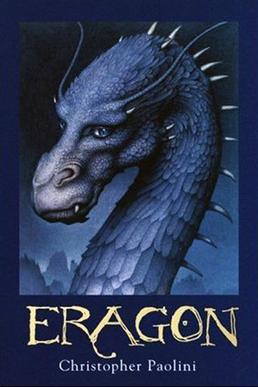
Eragon by Christopher Paolini- Eragon finds a blue stone in the woods which soon hatches into a dragon! Eragon keeps his new pet a secret, but that doesn't stop the Ra'zac—servants of the Empire—from getting suspicious and burning Eragon's uncle's farm. Eragon is forced to flee with his dragon, Saphira, and the old storyteller, Brom, who turns out to be much more than a storyteller. As they hunt down the Ra'zac, Brom teaches Eragon swordplay and magic and Eragon realizes that he and Saphira are far more important than either of them realized.
I enjoyed Eragon. I think its a good work of fantasy and Christopher Paolini must be credited for creating a working, coherent fantasy world. I enjoyed Eragon's growth throughout the book. I did, however, feel like Christopher Paolini "borrowed" too much from other franchises. Continually, I was saying to myself, "This reminds me of Star Wars!" or "This reminds me of Lord of the Rings!" and not, necessarily, in a good way. While it is good to learn from successful authors, to borrow too much from them is dishonest, even if it is unconsciously done.
Still, Eragon was an enjoyable book. I loved Paolini's take on magic. Magic in Paolini's book comes from a language of power, and using that magic costs the strength of the user. I thought that was really unique and more "realistic" than stories where magic does not "have a price," as Rumpelstiltskin would say in Once Upon a Time.
Ivanhoe by Sir Walter Scott- Ivanhoe is an exhilarating tale filled with knights, competitions, a damsel or two, and more than one familiar face. It is set during the Third Crusade—also known as the time of the Norman takeover, the time of Richard the Lionheart, and the time of Robin Hood—and follows the intersecting story lines of several characters. Ivanhoe, recently returned from the Holy Land, and his Saxon relatives clash with their Norman adversaries, Prince John ("Too late to be known as John the First, he's sure to be known as John the wooorst!") is trying to steal the throne from the missing King Richard, and Isaac the Jew is trying to protect his daughter, his hide, and his gold from persecutors.
So much goes on in Ivanhoe that I find it hard to write about. Really, all I can say about the whole book, and not just parts, is that it is epic and definitely worth reading.
My favorite characters were Wamba the Fool and Rebecca the Jewess. Her speeches against the Templar Knight's advances were wonderful; her loyalty to her faith astounded and inspired me. The Templar offered her love and riches—he even risked losing his status in his order just to woo her—but through it all, Rebecca remained stalwart in her Judaism. Honestly, I don't know if I would have persisted in my resistance, had I been in Rebecca's place. By standing strong in her faith, Rebecca shows women that they don't need a man to be content; God will fill the void, if you let him. Even if a man offers love and riches and even goes so far as to risk his reputation for you, it does not mean that he Mr. Right, especially if he means giving up your faith and your scruples. Rebecca is an unsung heroine of literature, I think. Her only fault is in her rejection of Jesus Christ as Lord and Savior.
Persuasion by Jane Austen- Kellynch Hall has become too expensive for Sir Walter Elliot's style of living and he and his eldest daughter must remove to Bath and rent the Hall. Anne Elliot, Sir Walter's second and often forgotten daughter, goes to stay with her younger sister's family, the Musgroves, where she meets with a former suitor and falls in love all over again. Persuasion is a lovely read. As it is one of Austen's last novels, it is more mature in its style; the heroine is certainly no Elizabeth Bennet. It is a rather quick read, only twenty-some chapters long, but it is full of delightful characters and a variety of different settings. I have enjoyed all of Jane Austen's novels (except Northanger Abbey, which I have not yet read), but I have especially enjoyed her more subdued novels like Mansfield Park and Persuasion. This book is a great read!
Synopsis: This coming-of-age story (or bildungsroman) follows Philip "Pip" Pirrip as he starts out in the country as a blacksmith's apprentice. The only problem is that young Pip has fallen in love with Estella, the wealthy ward of Miss Havisham, a woman who has mysteriously spent the last many years of her life locked away in her house, in her wedding dress. Estella causes Pip to raise his expectations from the humble station of an illiterate blacksmith to the seemingly unreachable station of "gentleman." Unexpectedly, a fortune is bequeathed on Pip from a mysterious benefactor and Pip leaves the country for London, to become a gentleman. There is also that mysterious convict that keeps popping unexpectedly into Pip's life.
Negatives: There is child abuse at the beginning, though nothing in great detail.
A few swears, as you are apt to find in any book from the 1800's.
Several of the oily characters do slimy things.
Positives/let the gushing begin! (Beware of minor spoilers beyond this part): Charles Dickens is a genius. Forever will I be comparing my own writing to his. The way he successfully weaves character development, plot, themes, and humor astounds and baffles me. Never before have I seen all four juggled so perfectly and with such a clear outcome.
First characters. The characters in Great Expectations are so human. They grow and change and learn from their mistakes.
I've only time to talk about Pip and my favorite character, Mr. Wemmick.
Pip is the main character and the story follows his life. It starts when he's about seven years, ending when he's about twenty-five. In the first chapter we find him visiting the graves of his parents, whom he doesn't remember. There, Pip meets an escaped convict who persuades Pip to steal food for him, which Pip does, and proceeds to feel extremely guilty about it. Dickens gives us a look into Pip's inner thoughts throughout the book (it is a first person narrative) and the way he describes Pip's guilt over his poor decisions and the way he describes Pip's fear of the convict are perfect. I can remember feeling that exact guilt and that exact fear in my life before. Dickens has a way of describing humanity as it is, no frills added.
Throughout the whole book, Pip struggles between what's logical and right, and what he wants. His intentions aren't bad: he wants to improve himself. However, he wants to improve himself to catch the attention of Estella, not for the sake of reaching his full potential. Through the novel, we see Pip's inner turmoil and through that, we see him grow as a person. We watch him make decisions and we watch him deal with the consequences - whether good or bad - of those decisions. In the end of the book, Pip is very different than in the beginning.
Mr. Wemmick is a law clerk clerk and, at first glance, that seems like that is all he is. But Wemmick has two sides to him. At the office, he is exactly as a law clerk should be. He doles out money to people like Pip, and turns away clients that Mr. Jaggers can't be bothered with. Seemingly, he has no heart, so coolly does he deal with clients.
But when he goes home, he is a totally different person. Mr. Wemmick has built himself a miniature castle in the middle of the city. He has put castle turrets on top of his house, has dug himself a moat (complete with drawbridge), and has mounted a gun on his roof which he fires every night. Just in case something were to happen, Wemmick is entirely self-contained in The Castle, with a garden and a pig out back.
Wemmick is a very practical man and his life's motto is to get "portable property" (but more on that in a moment).
He also has an Aged P.
"Very much," was Wemmick's reply, "for I have had my legs under the desk all day, and shall be glad to stretch them. Now, I'll tell you what I have got for supper, Mr. Pip. I have got a stewed steak - which is of home preparation - and a cold roast fowl - which is from the cook's-shop. I think it's tender, because the master of the shop was a Juryman in some cases of ours the other day, and we let him down easy. I reminded him of it when I bought the fowl, and I said, "Pick us out a good one, old Briton, because if we had chosen to keep you in the box another day or two, we could easily have done it." He said to that, "Let me make you a present of the best fowl in the shop." I let him, of course. As far as it goes, it's property and portable. You don't object to an aged parent, I hope?"
I really thought he was still speaking of the fowl, until he added, "Because I have got an aged parent at my place." I then said what politeness required.
Chapter 25
There are so many other characters I could talk about... Miss Havisham, Estella, Joe, Pumblechook, Mrs. Joe, Mr. Wopsle, Mr. Jaggers, Herbert, Magwitch... Perhaps someday I'll do a post centered on the characters of this great novel.
Plot. At first, Great Expectations just seems like another coming-of-age story. Pip grows up, learns a few things, yawn, boring. But the story is SO much more than that! There are several different plot lines and mini-mysteries weaving through the book and the way they are resolved is quite surprising! I had an inkling to what might happen later and, even when I found out that I had guessed rightly, I was still astonished! I couldn't believe the plot Dickens had conceived! I wonder, did he think it out beforehand, or did it just come to him while he was writing? After all, Great Expectations was a novel published through serialization in a magazine.
Themes. There are so many themes in this book. Pride and shame is something that Pip deals with in regards to his uncle Joe. Pip is so prideful after he becomes a gentleman, that he has no time for Joe - a simple country blacksmith - anymore. This makes Pip feel shameful, but he doesn't do anything about it until the end. This goes right along with the theme of social class, which is evident not only in the way Pip interacts with Joe and his other country friends, but in the way Pip interacts with Miss Havisham and Estella. Pip spends most of the novel trying to reach Estella's level of class.
A huge theme is self-improvement and having "expectations." Having "great expectations" refers to looking forward to greatness in the future. Pip's "great expectations" are to become a gentleman, which does come true. Throughout the whole book, Pip is trying to improve himself. Other characters like Biddy (Pip's first teacher), Joe, and Herbert are also trying to improve themselves in knowledge and in the working world.
One of the reasons that Pip wants to improve himself is that he is not satisfied with what he has at the smithy with Joe. Once he meets Miss Havisham and Estella, he longs for their lifestyle. Satisfaction and contentment when it comes to money and station is a huge theme. Take Wemmick, for example. He always urges Pip to get "portable property" which are small items that you can carry with you on your person and sell quickly if you need money. Things like jewelry. Even food. Practical Wemmick isn't looking for wealth and fame. He just wants enough to live relatively comfortably on. Pip, on the other hand, is discontent with everything he has in the book and wants more, or wants it differently. For example, when he finds out who his benefactor is, he isn't satisfied and refuses any more money (though Wemmick urges him to take the freely offered "portable property" of the benefactor).
Crime is another theme, though I won't go into that one at the present time since it is one that I haven't thought too much about, and also, it would probably spoil things. Love and what love makes people do is another one I won't go into right now. I might have to do a separate post on this sometime too...
Humor. You'd think that a book that aces character, plot, and themes wouldn't have first rate humor in it too, but it does. There are several "comic relief" characters. Pumblechook is Joe's uncle, and he spends the novel bragging to everyone that he was the man who provided Pip with his fortune, which is erroneous. There is also Mr. Wopsle who works in the church, but later abandons it to revive Shakespearean acting. He doesn't get all too warm a reception as Hamlet...
(Aside- Something kind of funny, though... When we were at the Globe Theater in London, they told us that in Shakespeare's time the audience was very involved in the play. They would shout out suggestions or answer the questions the characters posed to themselves. In Great Expectations, when Pip and his friend Herbert go to see Wopsle as Hamlet, the audience similarly takes part in the play!)
Wemmick and his Aged Parent can also be pretty funny, as well as Herbert.
And just the way Charles Dickens describes things can be very funny (or, rather, clever), in a dry sort of way.
Here is a rather humerous quote from chapter 20...
We Britons had at that time particularly settled that it was treasonable to doubt our having and being the best of everything: otherwise, while I was scared of the immensity of London, I think I might have had some faint doubts whether it was rather ugly, crooked, narrow, and dirty. ...nevertheless, a hackney coachman, who seemed to have as many capes to his great greatcoat as he was years old...
(Aside no. 2- That's another thing worth mentioning: the descriptions. While some could be a little long-winded at times, they were so clever and painted such a good picture in the mind's eye, you sort of pass over the long-windedness. Take these for example...
It was a rimy morning, and very damp. I had seen the damp lying on the outside of my little window, as if some goblin had been crying there all night, and using the window for a pocket-handkerchief.
-Chapter 3
So unchanging was the dull old house, the yellow light in the darkened room, the faded spectre in the chair by the dressing-table glass, that I felt as if the stopping of the clocks had stopped time in that mysterious place, and, while I and everything else outside grew older, it stood still.
-Chapter 17
Dinner over, we produced a bundle of pens, a copious supply of ink, and a goodly show of writing and blotting paper. For there was something very comfortable in having plenty of stationary.
Chapter 34
The way Dickens described every day things - like the above quote from chapter 34 - has a ring of truth in it. Even the way he describes some of the characters, though they aren't real, just makes them feel real. Like the way Mr. Jaggers the lawyer has to literally "wash his hands of his clients" with scented soap.)
Would I recommend it? I really, really enjoyed this book. I think it is the epitome of a great novel. However, not everyone has the same taste, so people who only read modern books like The Fault in Our Stars probably wouldn't enjoy or find any meaning in Great Expectations.
Title: Wuthering Heights Author: Emily Bronte My rating: 8 out of 10 stars. Summary (from Goodreads, because I simply can't seem to sum up this book): Wuthering Heights is a wild, passionate story of the intense and almost demonic love between Catherine Earnshaw and Heathcliff, a foundling adopted by Catherine's father. After Mr Earnshaw's death, Heathcliff is bullied and humiliated by Catherine's brother Hindley and wrongly believing that his love for Catherine is not reciprocated, leaves Wuthering Heights, only to return years later as a wealthy and polished man. He proceeds to exact a terrible revenge for his former miseries. The action of the story is chaotic and unremittingly violent, but the accomplished handling of a complex structure, the evocative descriptions of the lonely moorland setting and the poetic grandeur of vision combine to make this unique novel a masterpiece of English literature. Comments: Wuthering Heights is a book that people either really like or really despise. I thought I would despise it, but I ended up really liking it and I couldn't even tell you why. The same thing happened with The Phantom of the Opera by Gaston Leroux. Maybe it has something to do with the fact that they're both Gothic novels...? Both books are rather dark and dismal. And with both books, I really didn't like any of the characters.
Wuthering Heights is one of the rare books that made me eager to keep reading to find out what happened next. Not many books give me that feeling (though it is becoming a more common phenomenon for some reason. Maybe it's because I reread so many books that when I get one that I don't know too much about, I'm excited to find out what happens next).
(Spoilers ahead)
The plot follows two families who live in close proximity to each other on the English moors. The two houses are seemingly secluded from civilization (despite the nearby village) and really have nothing to do with people.
The first house is that of the Earnshaw's, who have two children: Hindley and Catherine. They also have a maid-in-training Nelly Dean. One day, Mr. Earnshaw returns with an abandoned boy named Heathcliff, whom he found in London, and adopts as another son. Slowly, the Earnshaw household becomes more and more secluded and more and more ungentlemanlike.
The other family is the Linton's. They also have two children: Edgar and Isabella. They are of a more noble society. The children and well-educated, but also secluded.
The two families are brought together and Edgar falls in love with Catherine. This is a problem because Heathcliff - who has grown rough and mean - also loves Catherine. Eventually, Edgar and Catherine marry, and Heathcliff marries Isabella. Neither of the marriages are happy. Catherine dies shortly after giving birth to her and Edgar's daughter Catherine mark II. Isabella runs away from Heathcliff around this time and a few months later gives birth to their son, whom she names Linton out of spite.
Years pass, and Linton comes to live with Edgar and Catherine after his mother dies. Unfortunately, Heathcliff gets a hold of his son and forces him to come and live with him. He also forces Linton and Cathy (II) to marry, though Linton dies shortly afterward.
The novel ends with Heathcliff's death and Cathy (II) and Hareton's - Hindley's son - intended marriage. The book ends on a happy note.
Other characters include the two narrators, Nelly Dean, and Mr. Lockwood, who is a tenant of the Linton's house after Edgar Linton dies. Another character is Joseph, who serves as the "comic relief" (if you can understand what he's saying!). His is described as "the wearisomest self-righteous Pharisee that ever ransacked a Bible to rake the promises to himself and fling the curses to his neighbours." There's also Hareton, Hindley's son, whom Heathcliff "raises" to be an illiterate servant. Hareton really has a soft(ish) heart and wishes to learn to read and write to impress Cathy (II).
The way the book was written impressed me very much. It starts out with Mr. Lockwood coming to live in Thrushcross Grange (try saying that out loud - it's so difficult!), the Linton's old home. After catching a terrible cold in the snow, he asks the housekeeper, Nelly Dean, to tell him the story of Heathcliff and the others over at Wuthering Heights. She begins her tale when Heathcliff first arrived as a child... and goes up to present day.
After that, Mr. Lockwood decides to leave the area for awhile. When he comes back, about six months later, there have been some developments in the story of Heathcliff. Nelly is no longer working at Thrushcross Grange, but is at Wuthering Heights. Mr. Lockwood goes to see her and she tells him what has transpired in the past few months. Mr. Lockwood gives up Thrushcross Grange, and everything ends as happily as is possible with such a dark book.
I absolutely LOVE books that have narratives like that - stories within stories. Chitty Chitty Bang Bang is like that. So is Canterbury Tales (though Chitty Chitty Bang Bang is much better than Canterbury Tales).
The characters... like I said before, I really hate most of them.
Heathcliff is probably THE WORST man in the entire fictional world. He is mean, nasty, revengeful, selfish, and just plain evil. Okay, okay... so it probably has something to do with the fact that he was abandoned as a child, and that Hindley - his adopted brother - hated him and abused him... and that Catherine, the girl he loved, left him for another man... BUT STILL. Everything in life is a choice. Heathcliff had a choice to forgive Hindley, to let Catherine go, to enjoy life, to be happy... but instead he let revenge take over his life. He wanted revenge on Hindley, so, like Hindley abused him, he abused Hindley's son Hareton. He wanted revenge on Edgar for marrying Catherine, so he married Edgar's sister Isabella, and made Cathy II, Edgar's daughter, marry his own son Linton.
He also had an obsession with Catherine. I think Edward Cullen took creepy lessons from Heathcliff. Sure, Edward Cullen may have crawled into Bella's room while she was sleeping... but Heathcliff dug up Catherine's grave to have one last look at her dead face.
Speaking of Catherine... She is one of the most self-centered characters I have ever read about. She hopes to keep the love of Heathcliff, while entertaining the hopes of Edgar. She eventually goes slightly mad and always throws a fuss when things don't work out her way.
Cathy II is a little bit the same way, but she's a lot better than her mother. It's only when she is introduced to her cousin Linton and her uncle Heathcliff that she starts down a bad path. By the end of the book, thankfully, she is a lot better off.
Cousin Linton is a disgrace. He's a wimp and just plain mean. His father manipulates him and uses him to do and say awful things, especially to Cathy II.
Hareton is also manipulated by Heathcliff and worked as a slave.
Edgar is also rather wimpy... He didn't make a very good decision by marrying Catherine. I feel a bit sorry for him.
I think the reason I enjoyed this book so much was because of the conflict between everyone. As I said before, I wanted to know what happened next. The story intrigued me. How could someone be as malicious as Heathcliff? What would have happened if he and Catherine had gotten married?
Which brings me to an interesting point... Through the whole book, even after Catherine dies, Heathcliff lusts after her. I wonder, if they had gotten married, how long would it have lasted? Both were intolerably self-centered and prone to anger if they didn't get their ways. How long would they have been able to tolerate each other before they started getting on each other's nerves? Was Heathcliff in love with Catherine, or a manifestation of his 'perfect woman'?
Anyway... this book gives further evidence that man should not be alone. I believe that when people are solitary for too long, their focus shifts off others, and turns solely on themselves. Imaginary problems start popping up, and eventually, a person becomes completely self-centered. This is what happens to many of the characters in Wuthering Heights. The two families are self-contained. For however many years, they only interacted with each other. Therefore, they had their own self-contained and self-centered world.
I wonder if this was reflective of Emily Bronte, the author, and her family's environment? I'm pretty sure the Bronte children were the ones who created the antisocial homeschooler myth. They were an odd family who, like the characters in Wuthering Heights, lived on a moor, and were very secluded. The children - especially Emily - were shy and not very adept in social situations. This obviously had an impact on their writing.
And perhaps that is the ultimate reason I enjoyed Wuthering Heights. I love finding connections between Author and Novel. That's why I think it's so important to study not only the work, but the person behind the work as well. You can find insight into the work, which you wouldn't have caught before, and you can find insight into the author. It adds another layer to the work which fascinates me. People fascinate me. Human nature, why people do what they do, the reasons behind things.
Wuthering Heights and Emily Bronte, I believe, do an excellent job of this.
Would I recommend it? Yes! I think this is a book that everyone should study at least once in their life.


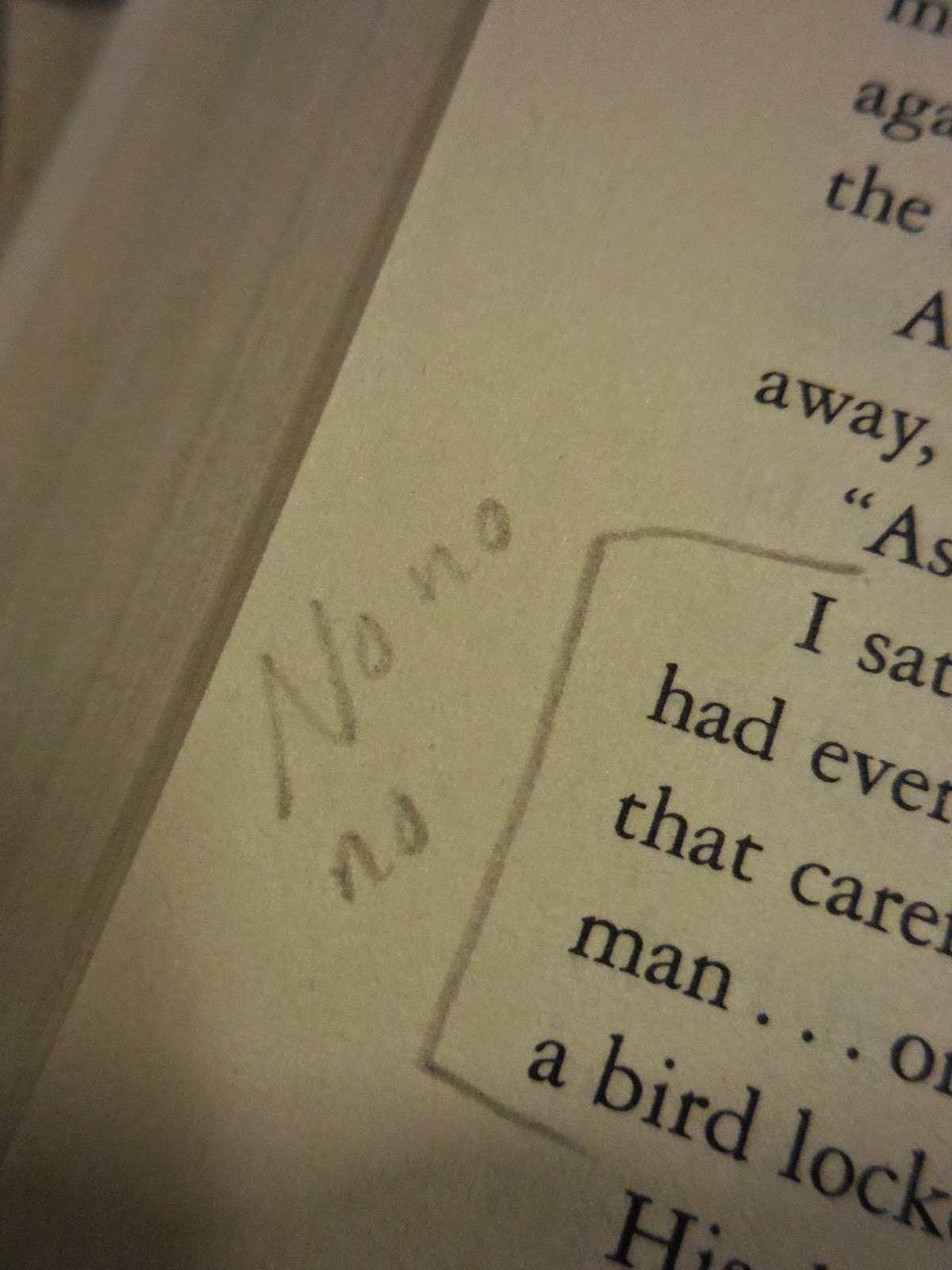


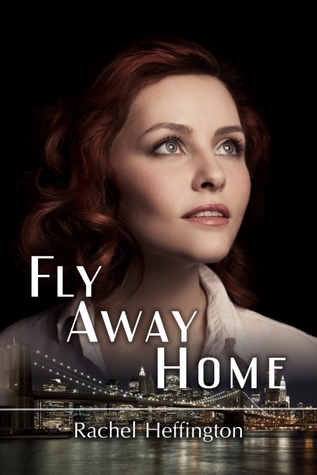
 )
)